
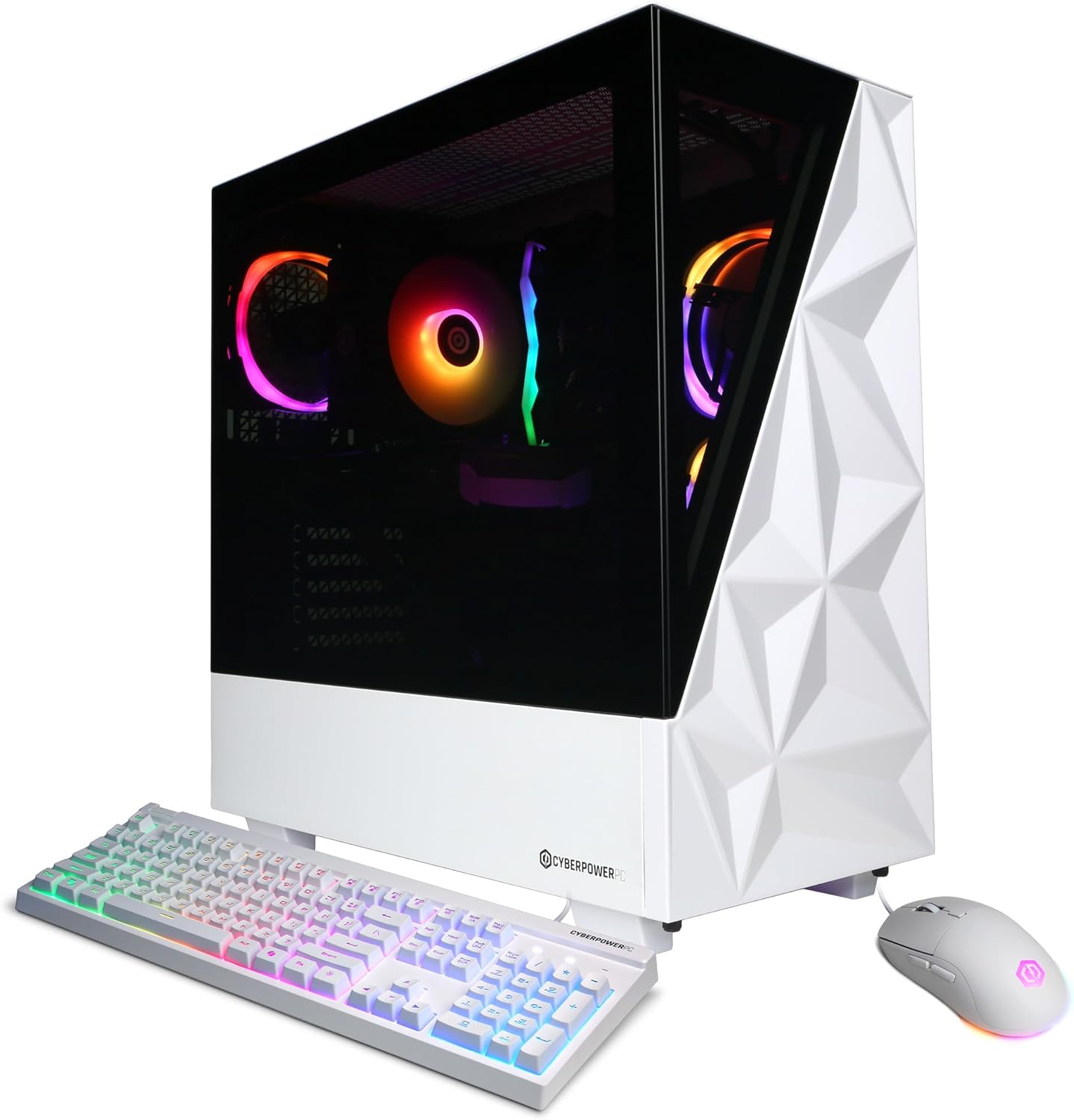


CyberPowerPC Gamer Xtreme VR (GXiVR8040A17) Review: A 14th-Gen Powerhouse Analyzed
Introduction: Redefining High-Performance Prebuilt Gaming
In the ever-evolving landscape of PC gaming, the demand for prebuilt systems that deliver both cutting-edge performance and out-of-the-box convenience has never been higher. CyberPowerPC, a prominent name in this sector, consistently aims to bridge the gap between bespoke enthusiast builds and accessible gaming solutions. The CyberPowerPC Gamer Xtreme VR (GXiVR8040A17) emerges as a formidable contender, purpose-built to tackle the demands of modern AAA titles, immersive virtual reality, and intensive content creation.
This machine pairs one of Intel’s latest 14th-generation processors with a high-VRAM variant of NVIDIA’s popular mid-range GPU. This comprehensive, technical review will dissect the hardware configuration of the GXiVR8040A17, analyzing the performance implications of its core components, from the Intel Core i7-14700F to its DDR5 memory and PCIe 4.0 storage. We will explore its capabilities as a high-fidelity gaming rig, a VR-ready station, and a content creation workhorse, all while adhering to a strict analysis of its provided specifications.
The Core: Intel Core i7-14700F Processor
The heart of the GXiVR8040A17 is its processor: the Intel Core i7-14700F. This CPU is a standout component from Intel’s 14th-generation “Raptor Lake Refresh” lineup, and it represents a significant leap in multi-core performance.
Architectural Breakdown
The i7-14700F is not a simple iterative update; it features a notable increase in core count over its predecessors. It is built on a hybrid architecture, combining two types of cores:
- Performance-cores (P-cores): Designed for high-frequency, single-threaded tasks (e.g., gaming frame rates, application responsiveness).
- Efficient-cores (E-cores): Designed to handle background tasks, multi-threaded workloads, and improve power efficiency.
The i7-14700F boasts a total of 20 cores (8 P-cores and 12 E-cores) and 28 threads. This is a substantial configuration that rivals previous-generation Core i9 models, making it an exceptional choice for users who do more than just game.
Performance Implications
The listed 2.1GHz base clock refers only to the E-cores’ base frequency and can be misleading. The true power of this CPU lies in its boost clocks, which can reach up to 5.4 GHz on its P-cores via Turbo Boost Max Technology 3.0.
For gaming, this high clock speed ensures elite-level performance, minimizing CPU bottlenecks even when paired with high-end graphics cards. It can easily handle high-refresh-rate gaming at 1080p and 1440p.
For content creation and streaming, the 20-core, 28-thread design is a massive asset. This allows the system to simultaneously run a demanding game, encode a high-bitrate stream via x264 (CPU encoding), and manage background applications like Discord and OBS without significant performance degradation. Video editors will see dramatically reduced render times in applications like Adobe Premiere Pro or DaVinci Resolve.
The “F” suffix simply indicates that this CPU does not have integrated graphics, which is irrelevant in a gaming PC as it relies entirely on its powerful dedicated graphics card.
The Graphics Engine: GeForce RTX 4060 Ti 16GB
This build includes the GeForce RTX 4060 Ti 16GB variant. This GPU, powered by NVIDIA’s “Ada Lovelace” architecture, is the system’s primary engine for visual fidelity. The most critical specification here is its 16GB of GDDR6 VRAM.
Why 16GB of VRAM Matters
In the current gaming landscape, 8GB of VRAM (found on the standard RTX 4060 Ti) can become a limiting factor in specific, demanding scenarios. The 16GB variant directly addresses these concerns:
- High-Resolution Textures: Modern AAA titles like Alan Wake 2 or Hogwarts Legacy can consume over 8GB of VRAM when using “Ultra” texture settings, especially at 1440p or 4K. The 16GB buffer allows these games to run smoothly without the stuttering associated with VRAM limitations.
- Future-Proofing: As games become more complex and photorealistic, their VRAM requirements will only increase. This 16GB card provides significant headroom for upcoming titles.
- Creative Workloads: For 3D modelers, animators, and AI researchers, a large VRAM buffer is essential for loading large models and datasets.
Gaming and Ray Tracing Performance
The RTX 4060 Ti is a 1440p champion. It is designed to deliver a high-frame-rate experience at this “sweet spot” resolution. Its core strength lies in NVIDIA’s proprietary technologies:
- DLSS 3 (Deep Learning Super Sampling): This AI-powered upscaling technology is a game-changer. It allows the GPU to render games at a lower internal resolution and then intelligently upscale the image to a high-quality 1440p or 4K output, providing a massive boost in frame rates.
- Frame Generation: Exclusive to the RTX 40-series, this feature inserts AI-generated frames between traditionally rendered frames, further smoothing motion and increasing perceived performance.
- Ray Tracing: The 3rd-generation RT cores offer efficient handling of complex lighting and reflection effects, making ray-traced visuals a viable option in supported titles.
When combined, these features allow the RTX 4060 Ti 16GB to provide a visually stunning and smooth experience, even in graphically intensive games with ray tracing enabled.
System Memory and Storage: A Study in Balance
A high-performance CPU and GPU require equally capable memory and storage to function optimally. The GXiVR8040A17 makes interesting choices in this regard.
Storage: 1TB PCIe 4.0 NVMe SSD
The inclusion of a 1TB PCIe 4.0 SSD is an excellent choice. This drive is built for speed, offering sequential read/write speeds that are significantly faster than older PCIe 3.0 and SATA SSDs. This translates directly to:
- Instantaneous Boot Times: The Windows 11 Home operating system will load in seconds.
- Vastly Reduced Game Loading: Levels in large open-world games will load exceptionally quickly.
- Snappy System Responsiveness: Applications launch immediately, and file transfers are rapid.
A 1TB capacity is a solid starting point, offering enough space for the OS, essential applications, and a healthy library of modern games. The motherboard will also provide additional M.2 or SATA ports for future storage expansion.
System RAM: The 16GB DDR5 Bottleneck
Herein lies the system’s most significant compromise. The build includes 16GB of DDR5 RAM. While DDR5 is the correct, modern standard—offering higher frequencies and better bandwidth than DDR4—the 16GB capacity is an unbalanced pairing with a 20-core i7-14700F and a 16GB VRAM graphics card.
While 16GB is still sufficient for many gaming-only scenarios, it creates a potential bottleneck in the very areas this PC’s other components excel at:
- Heavy Multitasking: Running a AAA game while simultaneously streaming, running multiple browser tabs, and Discord can easily consume more than 16GB of system RAM, leading to stuttering or system slowdowns.
- Content Creation: Professional video editing with 4K timelines, complex visual effects in After Effects, or running large 3D scenes will quickly saturate 16GB of RAM, hindering productivity.
- Future-Proofing: Just as VRAM requirements are rising, system RAM requirements for next-generation titles are also trending towards 32GB as the new standard for high-end play.
For any power user, a RAM upgrade to 32GB (2x16GB) of DDR5 should be considered the first and most essential post-purchase upgrade to unlock the true, unhindered potential of this machine.
Build Quality, Connectivity, and VR Readiness
CyberPowerPC systems are generally known for their clean assembly and use of standardized components. The GXiVR8040A17 typically features a chassis with a tempered glass side panel and RGB-illuminated fans, offering a modern aesthetic. The cable management is usually well-handled to promote optimal airflow, which is critical for cooling the high-performance i7 processor and RTX 40-series GPU.
Virtual Reality (VR) Performance
The “Gamer Xtreme VR” moniker is well-earned. VR gaming is uniquely demanding, requiring high, stable frame rates (90Hz or 120Hz) to prevent motion sickness. The combination of the i7-14700F’s strong single-core performance and the RTX 4060 Ti’s graphical power makes this system ideal for high-resolution headsets like the Valve Index or HP Reverb G2. The 16GB VRAM buffer is particularly beneficial for high-resolution VR textures and complex environments.
Connectivity
The system is designated “WiFi Ready,” indicating it includes either a built-in Wi-Fi 6/6E module on the motherboard or an included USB Wi-Fi adapter. This ensures high-speed wireless connectivity out of the box. The motherboard and case will provide a standard array of modern ports, including USB 3.2, USB-C, and multiple DisplayPort/HDMI outputs from the graphics card.
Final Verdict: An Elite Foundation with a Clear Upgrade Path
The CyberPowerPC Gamer Xtreme VR (GXiVR8040A17) is a powerhouse prebuilt PC that gets the most important components right. The Intel Core i7-14700F is an exceptional processor that offers elite-level performance for gaming, streaming, and heavy productivity. The GeForce RTX 4060 Ti 16GB is a smart inclusion, providing a massive VRAM buffer that ensures longevity and smooth performance at 1440p, even with “Ultra” textures and ray tracing enabled. The 1TB PCIe 4.0 SSD ensures the entire system feels fast and responsive.
The machine’s single, glaring weak point is its 16GB DDR5 system RAM. This capacity is an imbalanced choice for a build of this caliber and creates an immediate bottleneck for the very power users this PC is designed to attract.
However, as a foundation, the GXiVR8040A17 is outstanding. It delivers on its promise as a high-performance VR and 1440p gaming rig. For any user who acquires this machine, the path forward is clear: a simple and relatively inexpensive upgrade to 32GB of DDR5 RAM will transform this from a great PC into a truly exceptional and well-balanced workhorse for years to come.